Introduction
Whole Foods are becoming an essential part of a healthy lifestyle for anyone who wants to improve their overall well-being. But what exactly are Whole Foods, and why are they so important for your health? In simple terms, Whole Foods are natural, unprocessed, and nutrient-rich foods that come directly from the earth without unnecessary additives or artificial ingredients. Examples include fresh fruits, vegetables, whole grains, legumes, nuts, seeds, and minimally processed animal products. Unlike processed foods, which often lose essential vitamins and minerals during manufacturing, Whole Foods provide your body with complete nutrition in its purest form.
The importance of Whole Foods lies in the powerful benefits they offer. They are packed with fiber, antioxidants, vitamins, and minerals that help strengthen the immune system, boost energy levels, support healthy digestion, and reduce the risk of chronic diseases such as diabetes, heart disease, and obesity. By choosing Whole Foods over highly processed options, you give your body the fuel it needs to function at its best.
Incorporating more Whole Foods into your diet does not have to be complicated. Simply swapping refined grains for whole grains, snacking on fresh fruits instead of packaged sweets, or enjoying a homemade meal with fresh ingredients can make a huge difference. Ultimately, Whole Foods are the foundation of a balanced and sustainable diet. They nourish your body naturally, keep you energized, and play a key role in long-term health and wellness.
Metabolism and Its Role in Weight Loss
Metabolism is the complex biochemical process by which your body converts what you eat and drink into energy. Think of it as your internal engine, constantly running to power everything from breathing and circulating blood to moving your muscles. When it comes to weight loss, understanding this engine is the key to making it work for you, not against you.
Your Basal Metabolic Rate (BMR) is the number of calories your body needs to perform basic life-sustaining functions at rest. Surprisingly, your BMR accounts for a whopping 60-75% of the total calories you burn each day. This is why it’s the cornerstone of weight management. A faster metabolism means a higher BMR, which means you burn more calories even while doing nothing.
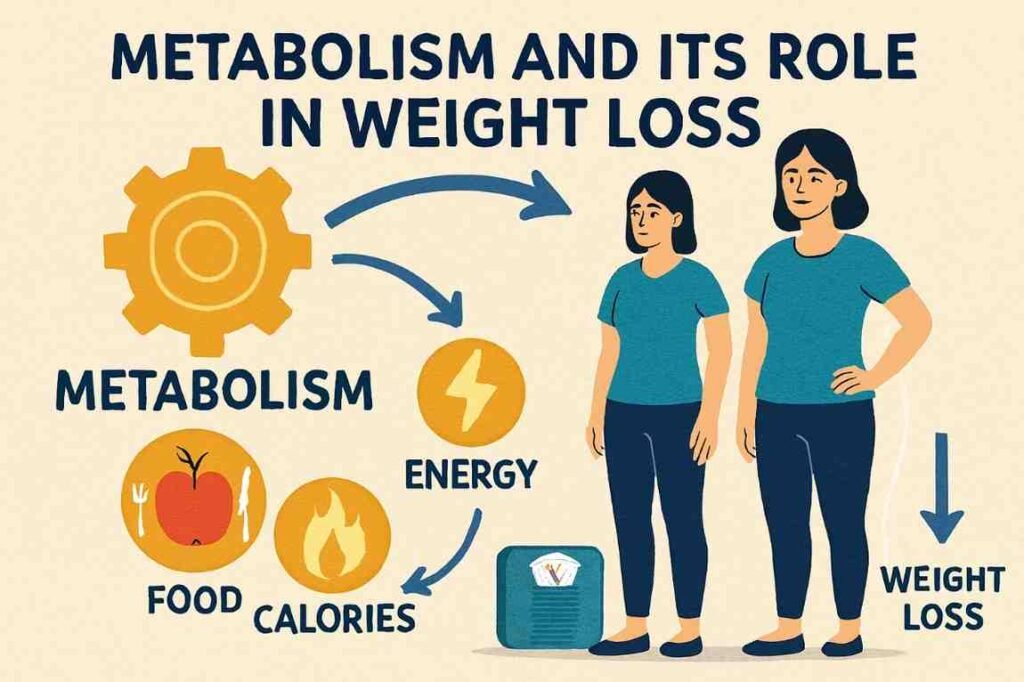
Many factors influence your metabolic rate, including age, genetics, sex, and body composition. While you can’t control all of these, you can focus on the most crucial variable: muscle mass. Muscle tissue is metabolically active, meaning it burns more calories at rest than fat tissue does. This is why building and preserving muscle through strength training is non-negotiable for a healthy metabolism.
Contrary to popular belief, severely restricting calories can sabotage your efforts. When you eat too little, your body perceives starvation and slows your metabolic rate to conserve energy, making it harder to lose weight. The true solution isn’t eating less but eating smart—fueling your engine with nutrient-dense foods and building muscle to keep your metabolic fire burning strong for sustainable weight management.
Unrealistic Expectations vs. Healthy Weight Loss Rates
The desire to lose weight fast is powerful, often fueled by dramatic before-and-after photos and promises of rapid transformations. However, this urgency is the very thing that derails most weight loss journeys, creating a cycle of frustration and failure. Understanding the stark difference between unrealistic expectations and healthy weight loss rates is crucial for achieving lasting results.
The Allure (and Danger) of Unrealistic Expectations
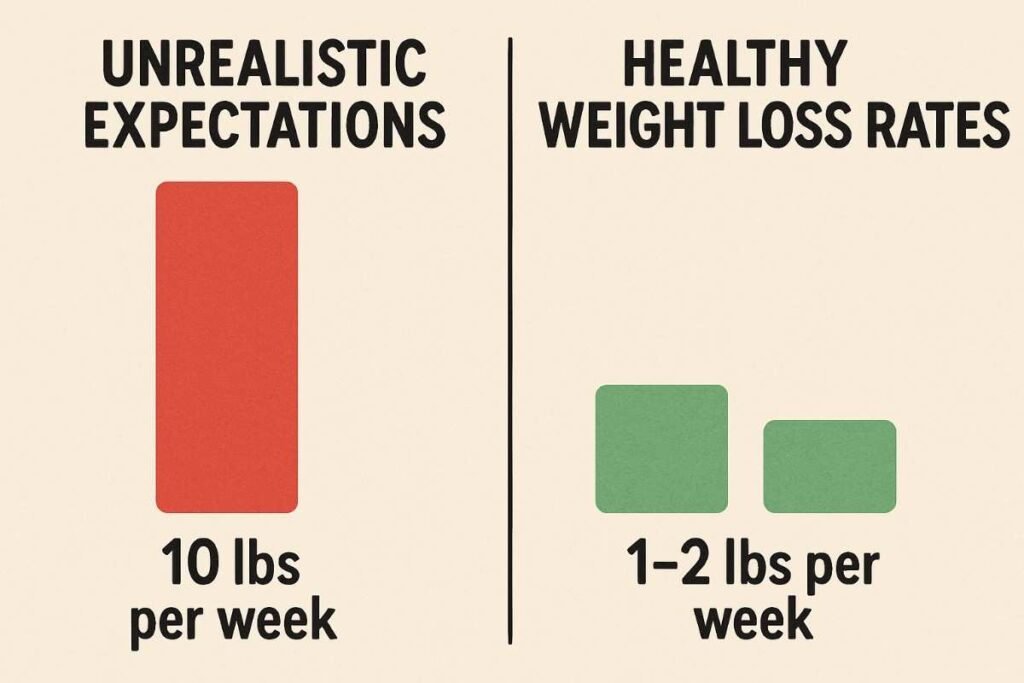
Unrealistic expectations are often rooted in the goal to lose weight fast—think 10 or 20 pounds in a month. This typically involves extreme calorie restriction, cutting out entire food groups, or excessive exercise. While this may lead to initial, dramatic drops on the scale (often from water weight and lost muscle, not just fat), it is unsustainable. Your body fights back by slowing your metabolism, increasing hunger, and leading to fatigue. This almost always results in burnout, nutrient deficiencies, and eventual regain, often of more weight than you started with.
The Power of a Healthy, Sustainable Rate
A healthy rate of weight loss, as recommended by experts like the CDC and NIH, is 1 to 2 pounds per week. While this may seem slow compared to the promise of rapid fixes, it is the pace that allows your body to lose weight correctly. Losing weight at this rate primarily targets fat mass while preserving crucial calorie-burning muscle. It allows for gradual adaptation to new eating patterns, is less likely to trigger starvation mode, and is far more manageable to maintain long-term.
Shifting your mindset from speed to sustainability is the true game-changer. Instead of asking, “How can I lose weight fast?” ask, “How can I build habits I can maintain?” Celebrate non-scale victories like more energy, better sleep, or clothes fitting looser. By embracing a patient, consistent approach focused on health—not just the scale—you build the foundation for a transformation that actually lasts.
Diet Mistakes That Block Weight Loss
You’re eating salads, cutting calories, and trying to lose weight fast, but the scale won’t budge. This frustrating plateau is often caused by common, well-intentioned diet mistakes that silently sabotage your progress. Identifying and fixing these errors is the key to unlocking lasting weight loss.
1. Severe Calorie Restriction
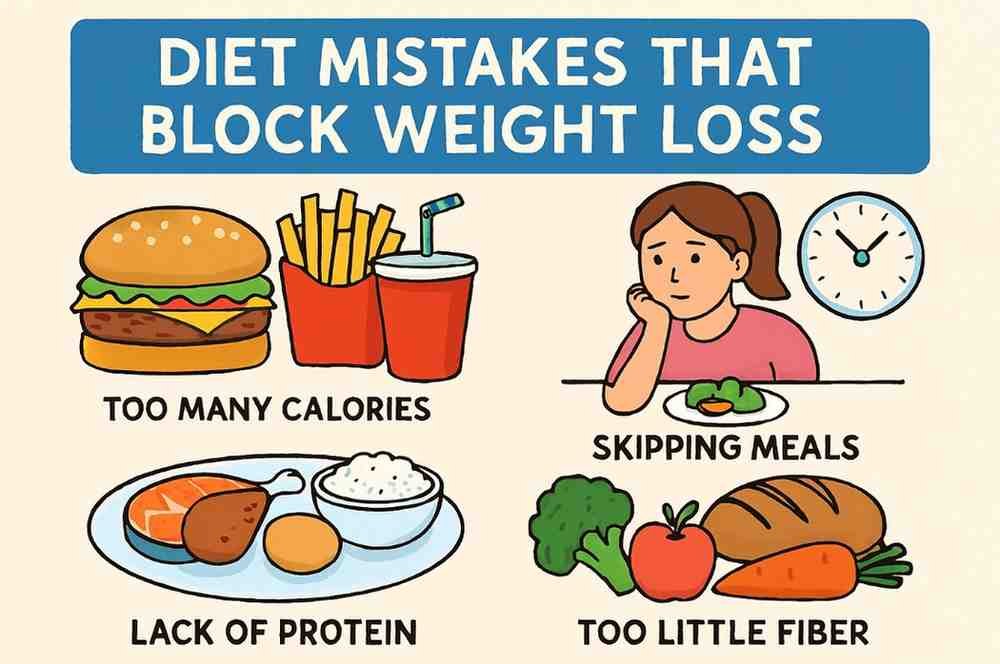
One of the biggest mistakes is slashing your calories too drastically. While a deficit is necessary, eating too little signals “famine” to your body. It responds by slowing your metabolism, breaking down muscle for energy, and holding onto fat stores. This makes weight loss increasingly difficult and leads to rebound overeating.
2. Not Eating Enough Protein
Protein is the powerhouse nutrient for weight loss. It boosts metabolism, reduces appetite, and helps preserve muscle mass—which is critical for maintaining a high metabolic rate. A diet low in protein leaves you feeling hungrier, less satisfied, and more likely to lose muscle instead of fat.
3. Overestimating “Health” Foods
Healthy doesn’t always mean low-calorie. Nutrient-dense foods like avocados, nuts, olive oil, and dried fruits are healthy in moderation but are also calorie-dense. Mindlessly overconsuming these can unknowingly push you out of a calorie deficit, blocking weight loss despite eating “clean.”
4. Liquid Calories and Sugar
Sugary coffees, sodas, juices, and even alcoholic beverages are liquid calories that provide little satiety but a significant calorie load. Your brain doesn’t register these calories the same way it does solid food, making it easy to consume hundreds of extra calories without feeling full, completely halting your progress.
5. All-or-Nothing Thinking
The mindset of “I already messed up, so I might as well keep going” is a major roadblock. One high-calorie meal or a missed workout doesn’t ruin your progress. However, letting it derail your entire week does. Perfection is not the goal; consistency is.
The solution isn’t a stricter diet; it’s a smarter one. By focusing on a moderate calorie deficit, prioritizing protein, being mindful of portions, choosing whole foods, and adopting a flexible mindset, you can break through these blocks and achieve sustainable weight loss.
Lifestyle Factors That Affect Progress: It’s More Than Just Diet and Exercise
When you’re struggling to see results. It’s easy to blame your diet or workout plan. However, some of the most powerful factors influencing weight loss happen outside the gym and kitchen. Overlooking key lifestyle elements like stress, sleep, and activity variety is a common reason progress stalls.
1. Chronic Stress and Cortisol Levels
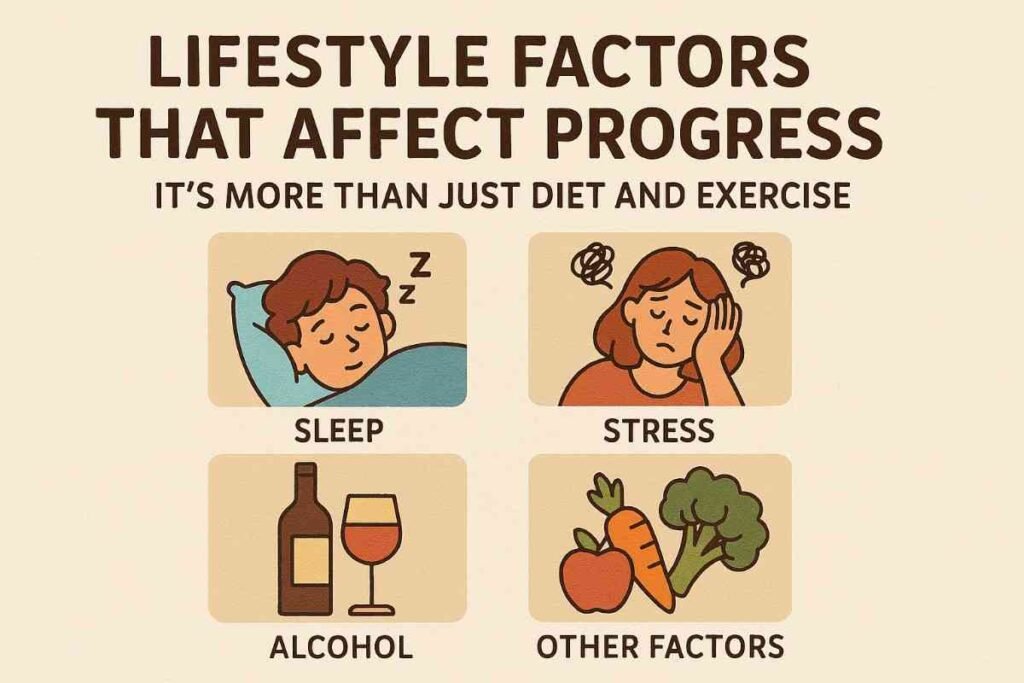
When you’re constantly stressed, your body produces high levels of the hormone cortisol. While useful in short bursts, chronically elevated cortisol can directly hinder weight loss. It can increase cravings for high-fat, high-sugar “comfort” foods, encourage the body to store fat—particularly around the abdomen—and break down muscle tissue for energy, slowing your metabolic rate over time. Managing stress isn’t a luxury; it’s a critical component of a successful weight loss strategy.
2. The Domino Effect of Poor Sleep
Skimping on sleep does more than just make you tired; it creates a hormonal imbalance that sabotages your efforts. Poor sleep:
- Increases Ghrelin: The hormone that signals hunger.
- Decreases Leptin: The hormone that signals fullness.
- Increases Cortisol: Further amplifying stress and fat storage.
This combination leads to increased appetite, poorer food choices, and less energy for physical activity, creating a vicious cycle that blocks weight loss.
3. Lack of Physical Activity Variety
Doing the same workout routine, day after day, is a common plateau culprit. Your body is incredibly efficient and adapts to repeated stress. If you only do steady-state cardio, your metabolism adapts, and you burn fewer calories doing the same activity. Incorporating variety is essential:
- Strength Training: Builds metabolically active muscle, which burns more calories at rest.
- High-Intensity Interval Training (HIIT): Boosts your metabolic rate for hours after the workout (the “afterburn effect”).
- Active Recovery: Low-intensity movement like walking aids recovery and boosts daily calorie burn without adding stress.
The Solution: A Holistic Approach
Sustainable weight loss isn’t just about a perfect diet. It’s about managing stress through techniques like meditation or walking, prioritizing 7-9 hours of quality sleep per night, and incorporating a varied, balanced fitness routine. By optimizing these lifestyle factors, you create a internal environment where your body is primed to lose fat and thrive.
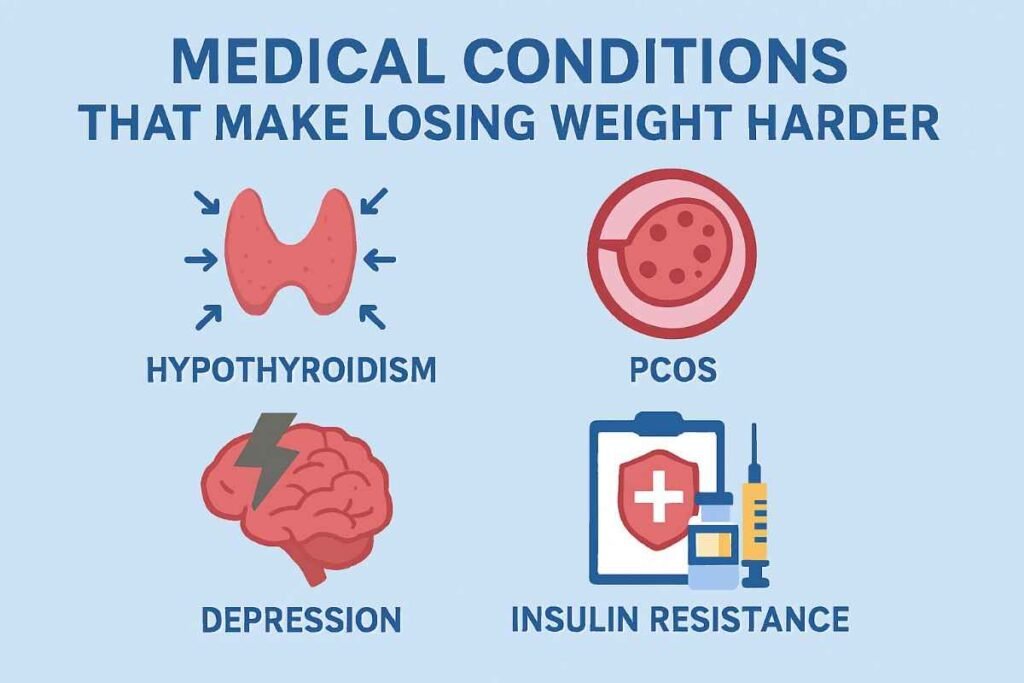
Medical Conditions That Make Losing Weight Harder: When It’s Not Your Fault
You’re diligently following a healthy diet and exercise plan, but the scale refuses to move. Before you blame a lack of willpower, it’s important to understand that certain underlying medical conditions can create significant physiological barriers to weight loss. Recognizing these conditions is the first step toward finding an effective solution.
Common Medical Hurdles on Your Weight Loss Journey
Several health issues can directly impact your metabolism, hormones, and ability to lose weight:
- Hypothyroidism (Underactive Thyroid): Your thyroid gland regulates your metabolism. When it’s underactive, it doesn’t produce enough hormones, slowing your metabolic rate to a crawl. This can lead to unexplained weight gain, fatigue, and feeling cold, making weight loss feel impossible without proper treatment.
- Polycystic Ovary Syndrome (PCOS): A common hormonal disorder, PCOS is strongly linked to insulin resistance. This means your body’s cells don’t respond well to insulin, causing it to produce more. High insulin levels promote fat storage, particularly around the abdomen, and increase hunger, creating a perfect storm for weight gain and difficulty losing weight.
- Insulin Resistance: While often a component of PCOS and prediabetes, insulin resistance can exist on its own. It disrupts how your body processes energy from food, making it exceptionally easy to store fat and very hard to burn it, even when you are in a calorie deficit.
When to Seek Medical Guidance
It’s crucial to consult a doctor if you are consistently following a healthy lifestyle but experiencing no progress, especially if you also notice any of these red flags:
- Unexplained, rapid weight gain
- Severe fatigue and low energy levels
- Changes in appetite or extreme hunger
- Difficulty losing weight despite a significant calorie deficit and exercise
- Other symptoms like feeling cold constantly, hair loss, dry skin (associated with thyroid issues), or irregular periods and excessive facial hair (associated with PCOS).
You Are Not Failing
If you suspect an underlying condition, seeking help is not admitting defeat—it’s advocating for your health. A healthcare provider can run simple tests to check your thyroid function, blood sugar, and hormone levels. A diagnosis is powerful; it provides a clear path forward, which may include medication, targeted dietary changes (like a low-glycemic diet for insulin resistance), and a tailored exercise plan that works with your body’s unique needs, finally allowing you to achieve your goals.
The Real Solution to Sustainable Weight Loss: Ditch the Quick Fixes
The journey to lasting weight loss is not found in a drastic shake cleanse or an extreme diet promising to help you lose weight fast. These quick fixes are designed to fail, offering temporary results at the cost of your metabolism and well-being. The true, powerful solution is a fundamental shift toward nourishing, sustainable habits.
Focus on a Balanced Diet, Not Deprivation
The cornerstone of sustainable weight loss is a balanced diet built on whole foods. This isn’t about perfection; it’s about consistency and making smarter choices that fuel your body effectively.
Prioritize Whole Foods:
Build your meals around minimally processed foods like vegetables, fruits, lean proteins, whole grains, and healthy fats. These foods are nutrient-dense, meaning they provide more volume and satiety for fewer calories, helping you feel full and satisfied.
Power Up with Protein:
Include a source of protein with every meal. Protein is essential for curbing hunger, boosting metabolism, and preserving lean muscle mass—which is critical for maintaining a healthy metabolic rate.
Practice Portion Control:
Even healthy foods contain calories. Learning to recognize appropriate portion sizes is a key skill for maintaining a gentle calorie deficit without feeling deprived. Use simple tricks like using smaller plates and being mindful of serving sizes.
Why You Must Avoid Crash Diets
Crash diets that severely restrict calories or entire food groups are the antithesis of sustainable weight loss. They trigger your body’s starvation response, slowing your metabolism and priming you for rapid weight regain once you resume normal eating—often leaving you heavier than when you started.
The real victory is not in seeing the number on the scale drop rapidly, but in building a healthy relationship with food. By choosing a balanced, enjoyable approach to eating, you create a lifestyle that supports your weight goals indefinitely, without the cycle of burnout and disappointment. This is how you win the long game.
Build a Consistent Workout Routine: Your Blueprint for Fitness Success
Creating a workout plan that you can actually stick to is the true game-changer for sustainable weight loss and health. The goal isn’t to find the most extreme program. It’s to build a realistic, balanced routine that becomes a non-negotiable part of your life, especially if you’re busy.
The Power Couple: Cardio + Strength Training
The most effective routine combines two key types of exercise. Relying on just one is like trying to clap with one hand.
Strength Training (The Metabolism Booster):
This is non-negotiable for body composition. Lifting weights or using resistance bands builds lean muscle mass. Since muscle is metabolically active. Having more of it means you burn more calories at rest, even while sleeping. It shapes your body and is your best defense against metabolic slowdown.
Cardio (The Heart Helper & Calorie Burner):
Cardiovascular exercise, like brisk walking, running, or cycling, strengthens your heart and lungs. It helps create the calorie deficit needed for weight loss and improves your overall endurance.
Combining both ensures you’re burning fat effectively. While simultaneously building a leaner, stronger physique. That burns calories more efficiently 24/7.
Short, Realistic Routines for Busy Schedules
You don’t need hours in the gym. Consistency with shorter, focused workouts far outweighs occasional marathon sessions. Aim for 3-4 days per week as a sustainable target.
Sample Weekly Routine (Under 45 mins/session):
1: Full Body Strength (30-40 mins)
- Squats or Lunges: 3 sets of 10-12 reps
- Push-ups (or Knee Push-ups): 3 sets to near failure
- Dumbbell Rows: 3 sets of 10-12 reps per arm
- Plank: 3 sets, hold for 30-60 seconds
2: Active Recovery (20-30 mins)
- Brisk walking, gentle cycling, or yoga/stretching.
3: Full Body Strength + HIIT Finisher (35-45 mins)
- Repeat Day 1’s strength circuit.
- Add a 10-minute HIIT finisher: 30 seconds of high-intensity effort (e.g., jumping jacks, mountain climbers, sprinting in place). Followed by 60 seconds of rest. Repeat 5-6 times.
Day 4: Moderate Cardio (30 mins)
- A steady-paced activity you enjoy: jogging, swimming, dancing, or a long walk.
The Key to Consistency: Schedule It!
Treat your workout like any other important appointment. Block out time in your calendar, lay out your clothes the night before, and have a plan. By making your routine realistic, balanced, and time-efficient, you remove the barriers to getting it done, making fitness a permanent part of your healthy lifestyle.
Improve Lifestyle Habits: The Unsung Heroes of Weight Loss
You can have the perfect diet and workout plan, but if you neglect core lifestyle habits, you’ll likely find yourself hitting a frustrating plateau. True, sustainable weight loss is achieved by optimizing all aspects of your health, not just the obvious ones. Prioritizing sleep, stress, and hydration is what separates a short-term fix from lifelong success.
1. Prioritize Sleep and Stress Management
These two factors are so powerful they can single-handedly halt your progress due to their direct impact on hormones.
- Sleep: Your Secret Weight Loss Weapon: Aim for 7-9 hours of quality sleep per night. Poor sleep disrupts the hormones that control hunger:
- It increases ghrelin (the “hunger hormone”).
- It decreases leptin (the “fullness hormone”).
This hormonal shift leads to increased cravings, especially for high-carb and sugary foods, and a lack of energy to exercise.
- Tame Stress to Tame Cravings: Chronic stress keeps the hormone cortisol elevated. High cortisol levels promote fat storage, particularly around the abdomen, and can trigger emotional eating. Incorporate daily stress-reduction techniques like:
- 10 minutes of meditation or deep breathing
- A daily walk in nature
- Journaling
2. The Power of Hydration
Water is essential for every metabolic process in your body, including fat burning. Often, our bodies mistake thirst for hunger. Drinking adequate water throughout the day:
- Helps control appetite by promoting a feeling of fullness.
- Boosts metabolism slightly, especially if the water is cold.
- Improves workout performance by preventing dehydration and fatigue.
Carry a water bottle with you and aim to drink consistently throughout the day, not just when you feel thirsty.
3. Track Progress Mindfully
How you measure progress can make or break your motivation. Ditch the scale-as-the-only-metric mentality.
- The Scale Lies (Sometimes): Your weight can fluctuate daily due to water retention, muscle gain, and other factors. Weigh yourself no more than once a week, at the same time of day, or focus on other metrics entirely.
- Celebrate Non-Scale Victories (NSVs): These are often better indicators of true change. Notice and celebrate:
- Clothes fitting looser
- Having more energy throughout the day
- Improved mood and sleep quality
- Being able to lift heavier or walk further
By nurturing these foundational habits, you create a healthy internal environment where your body is primed to lose fat, function optimally, and maintain results for good. This holistic approach is the real secret to unlocking sustainable weight loss.
Set Realistic & Motivating Goals: Your Compass for the Weight Loss Journey
The path to sustainable weight loss is often abandoned not due to a lack of effort, but because of poorly defined goals. Focusing solely on the number on the scale is a recipe for frustration. The key to long-term success is shifting your mindset and setting goals that are both realistic and genuinely motivating, guiding you toward lasting health rather than just a temporary drop in pounds.
Focus on Long-Term Health, Not Just the Scale
When your only goal is to lose weight fast, you inevitably choose short-term tactics over long-term strategy. This often leads to restrictive diets that are impossible to maintain, resulting in a cycle of losing and regaining weight—a process that is discouraging and metabolically damaging.
Instead, set your compass toward long-term health and well-being. Ask yourself: “How do I want to feel in six months?” Your goals should reflect this:
- Unrealistic Goal: “I want to lose 20 pounds this month.”
- Realistic & Motivating Goal: “I will build consistent habits by cooking three healthy meals at home each week and walking for 30 minutes four days a week.”
This reframe makes the process the goal, not just the outcome. The weight loss becomes a natural side effect of your healthier lifestyle, not a stressful finish line.
Celebrate Non-Scale Victories (NSVs)
Your weight is just one data point. True transformation is measured in how you live and feel every day. Celebrating Non-Scale Victories provides constant motivation and proof that your efforts are working, even when the scale seems stuck.
Make it a goal to notice and celebrate these wins:
- Increased Energy: Not needing that afternoon coffee crash to get through the day.
- Improved Strength: Lifting a heavier weight, carrying groceries with ease, or noticing more definition in your muscles.
- Better Mood: Feeling less anxious, more patient, or generally more positive.
- Quality Sleep: Waking up feeling refreshed and rested.
- Clothing Fit: Your jeans feel looser, or you can fit into an old favorite piece of clothing.
- Mindful Eating: Recognizing when you’re full and stopping naturally, without guilt.
By setting goals centered on actions and non-scale victories, you build a positive feedback loop. Every healthy meal or strong workout feels like a win, keeping you motivated and consistently moving forward on your journey to a healthier, happier you.
Frequently Asked Questions (FAQs) About Weight Loss
1. Why is it so hard for me to lose weight?
Weight loss is complex and rarely just about willpower. Common barriers include a slowed metabolism from extreme dieting, underlying medical conditions (like hypothyroidism or PCOS), chronic stress, poor sleep, hormonal imbalances, and inconsistent habits. The body is designed to protect its weight, making sustainable loss a gradual process.
2. What is a realistic amount of weight to lose per week?
A realistic and healthy rate of weight loss is 1-2 pounds per week. This pace allows your body to lose fat while preserving crucial muscle mass and is far more sustainable than rapid loss, which often leads to rebound weight gain.
3. I’m exercising but not losing weight. Why?
This is a common frustration. Several factors could be at play:
- Diet: You may be consuming more calories than you realize (e.g., dressings, sauces, drinks).
- Adaptation: Your body has adapted to your workout routine, making it less effective.
- Muscle Gain: You might be losing fat but gaining muscle, which is denser. The scale may not move, but your body composition is improving.
- Lifestyle Factors: High stress and poor sleep can halt progress despite exercise.
4. How important is diet versus exercise for weight loss?
Both are important, but diet generally has a larger impact on weight loss because creating a calorie deficit is more directly achieved through food intake. Exercise is crucial for overall health, improving metabolism, preserving muscle, and shaping your body. The most effective strategy is always a combination of both.
5. What are the best foods to eat for weight loss?
Focus on whole, nutrient-dense foods that promote satiety:
- Lean Protein: Chicken breast, fish, eggs, Greek yogurt, tofu, legumes (keep you full).
- Fiber-Rich Foods: Vegetables, fruits, whole grains (aid digestion and fullness).
- Healthy Fats: Avocado, nuts, seeds, olive oil (support hormone function).
The goal is to build balanced meals that keep you satisfied and energized.
6. When should I see a doctor about my inability to lose weight?
Consult a healthcare professional if you are consistently following a healthy diet and exercise plan for several months and see no progress, especially if you experience other symptoms like severe fatigue, unexplained weight gain, changes in appetite, irregular periods, or feeling cold constantly. This can help rule out medical conditions like thyroid issues or PCOS.
7. How can I stay motivated when weight loss is slow?
Shift your focus from the scale to non-scale victories (NSVs). Celebrate having more energy, fitting into old clothes, sleeping better, lifting heavier weights, or simply feeling happier and less stressed. These are the true indicators of lasting change and will keep you motivated for the long haul.
Conclusion: Your Journey to Sustainable Weight Loss Starts Here
The quest to lose weight fast is a seductive one, but as we’ve uncovered, it’s a path that often leads to a dead end of frustration, metabolic adaptation, and rebound weight gain. The true obstacle isn’t a lack of willpower—it’s a combination of physiological realities, common diet mistakes, lifestyle factors, and sometimes, underlying medical conditions.
The solution isn’t found in another drastic, short-term fix. Sustainable weight loss is a marathon, not a sprint. It is achieved through a holistic approach that honors how your body actually works:
- Nourish it with a balanced diet rich in whole foods and protein, not extreme restriction.
- Strengthen it with a consistent routine of both cardio and resistance training.
- Support it by prioritizing sleep, managing stress, and staying hydrated.
- Understand it by setting realistic goals and celebrating non-scale victories that measure true well-being.
This journey is not about perfection. It’s about progress. It’s about building small, consistent habits that compound over time to create a transformation that lasts a lifetime. Let go of the pressure to lose weight fast. Instead, invest in the slower, more rewarding process of building a healthier, stronger, and more energetic you. You have the knowledge; now take the first step with patience and self-compassion. Your future self will thank you.