
Struggling to lose stubborn belly fat? You’re not alone. Despite dieting and cardio, many find it challenging to shed excess fat around the midsection. The good news? Strength training could be the missing piece in your weight loss journey.
Unlike traditional cardio, strength training builds lean muscle, which boosts metabolism and enhances fat-burning even at rest. Studies show that resistance training is highly effective in reducing visceral fat—the dangerous fat surrounding internal organs. By increasing muscle mass, your body burns more calories, making it easier to lose stubborn belly fat over time.
Additionally, strength training improves insulin sensitivity, reducing fat storage around the abdomen. Combined with a balanced diet and moderate cardio, it creates a powerful fat-loss strategy. Exercises like squats, deadlifts, and core workouts engage multiple muscle groups, maximizing calorie expenditure and sculpting a leaner physique.
If you’ve hit a plateau with other methods, incorporating strength training 2-3 times per week could be the key to finally losing stubborn belly fat. Ready to transform your body? Let’s explore how lifting weights can help you achieve a toned, healthier midsection.
What Is Stubborn Belly Fat?
Stubborn belly fat refers to the excess fat around the abdominal area that is particularly difficult to lose, even with diet and exercise. Unlike subcutaneous fat (which lies just under the skin), stubborn belly fat often includes visceral fat—a deeper, more dangerous type that surrounds internal organs and is linked to health risks like diabetes, heart disease, and metabolic disorders.
Why Is Belly Fat So Hard to Lose?
- Hormonal factors (like cortisol from stress and insulin resistance) can promote fat storage in the midsection.
- Genetics play a role in where your body tends to store fat.
- Poor diet & lifestyle choices, such as excessive sugar, refined carbs, and lack of sleep, contribute to fat retention.
While spot reduction isn’t possible, a combination of cardio, strength training, core exercises, and a balanced diet can help reduce stubborn belly fat over time. Consistency, patience, and a holistic approach are key to achieving lasting results.
Want to finally lose stubborn belly fat? Stay tuned for the best exercises and science-backed strategies to slim down your waistline!
The Myth of Spot Reduction:
Many people believe that endless crunches or ab workouts will magically remove stubborn belly fat, but science says otherwise. Spot reduction—the idea that you can burn fat from a specific area by targeting it with exercises—is a myth. While crunches strengthen your core muscles, they don’t directly burn belly fat. Fat loss happens holistically as your body sheds fat from all areas, not just the ones you’re working.
Why Crunches Fall Short
- Fat loss is systemic: Your body burns fat based on genetics, hormones, and overall calorie deficit—not isolated exercises.
- Visceral fat requires more than abs workouts: Deep belly fat (visceral fat) responds better to full-body workouts, cardio, and diet changes than just core exercises.
- Muscle vs. fat: You can build strong abs under a layer of fat, but without reducing overall body fat, they won’t be visible.
To truly remove stubborn belly fat, you need a comprehensive approach, not just crunches.
The Holistic Approach:
Since spot reduction doesn’t work, the most effective way to remove stubborn belly fat is through a balanced, long-term strategy:
1. Nutrition: The Foundation of Fat Loss
- Calorie deficit: Burn more calories than you consume.
- High-protein diet: Supports muscle retention and fat burning.
- Fiber & healthy fats: Keeps you full and reduces cravings.
- Limit sugar & refined carbs: These spike insulin, promoting fat storage.
2. Exercise: Combine Strength & Cardio
- HIIT & cardio (running, cycling, swimming): Burns calories and boosts metabolism.
- Strength training (compound lifts, resistance workouts): Builds muscle, increasing fat burn even at rest.
- Core exercises (planks, leg raises, Russian twists): Strengthen abs but should complement—not replace—full-body workouts.
3. Lifestyle Factors
- Sleep (7-9 hours/night): Poor sleep increases cortisol, which promotes belly fat.
- Stress management (meditation, yoga): High stress = more fat storage.
- Hydration & avoiding alcohol: Dehydration and excess alcohol slow fat loss.
4. Consistency Over Quick Fixes
- No magic pill or shortcut: Sustainable fat loss takes time.
- Track progress: Measure waist circumference, not just weight.
By combining smart nutrition, effective workouts, and healthy habits, you can finally remove stubborn belly fat—and keep it off for good! 🚀
Best Exercises to Remove Stubborn Belly Fat
High-Intensity Interval Training (HIIT)
When it comes to tackling stubborn belly fat, High-Intensity Interval Training (HIIT) is a highly effective approach. HIIT involves short bursts of intense exercise followed by brief periods of rest or low-intensity exercise. This method can significantly boost your body’s fat-burning capabilities, even after your workout is complete.

Benefits of HIIT for Fat Burning:
Elevated Calorie Burn:
HIIT workouts are known for their high energy expenditure during the exercise session itself. You burn more calories in a shorter amount of time compared to steady-state cardio.
EPOC (Excess Post-exercise Oxygen Consumption):
One of the most significant benefits of HIIT is the “afterburn effect.” After a HIIT session, your body continues to burn calories at an elevated rate for hours as it recovers and returns to its pre-exercise state. This EPOC contributes significantly to overall fat loss.
Improved Insulin Sensitivity:
HIIT can help improve your body’s sensitivity to insulin, which is crucial for fat loss. Better insulin sensitivity means your body is more efficient at using glucose for energy and less likely to store it as fat.
Preservation of Muscle Mass:
Unlike long, steady-state cardio, which can sometimes lead to muscle loss, HIIT is generally more effective at preserving muscle mass while promoting fat loss. Muscle is metabolically active, meaning more muscle helps burn more calories at rest.
Increased Growth Hormone Production:
HIIT has been shown to increase the production of human growth hormone (HGH), which plays a vital role in fat metabolism and muscle growth.
Example Workouts:
Here are some examples of HIIT exercises you can incorporate into your routine to target stubborn belly fat:
- Sprint Intervals:
- Find an open space or a treadmill.
- Warm up with a light jog for 5 minutes.
- Sprint as fast as you can for 30 seconds.
- Walk or jog slowly for 60-90 seconds to recover.
- Repeat this cycle 8-12 times.
- Cool down with a light walk for 5 minutes.
- Jumping Jacks:
- Perform jumping jacks intensely for 45 seconds.
- Rest for 15 seconds.
- Repeat for 10-15 rounds.
- Burpees:
- Start standing.
- Drop into a squat position with your hands on the floor.
- Kick your feet back into a plank position.
- Perform a push-up (optional).
- Jump your feet back to the squat position.
- Explode upwards into a jump, reaching your arms overhead.
- Perform as many burpees as possible in 45 seconds.
- Rest for 15 seconds.
- Repeat for 8-12 rounds.
Important Considerations:
Warm-up and Cool-down:
Always begin your HIIT workout with a proper warm-up to prepare your muscles and end with a cool-down to aid recovery.
Proper Form:
Focus on maintaining correct form to prevent injuries and maximize the effectiveness of the exercises.
Listen to Your Body:
HIIT is demanding. If you’re new to it, start with shorter intervals and fewer rounds, gradually increasing as your fitness improves.
Consistency:
The key to seeing results is consistency. Aim for 2-3 HIIT sessions per week on non-consecutive days to allow for recovery.
Nutrition:
While HIIT is excellent for fat loss, it’s crucial to pair it with a balanced, calorie-controlled diet for optimal results.
Cardiovascular (Aerobic) Exercise: Sustained Calorie Burn
In conjunction with high-intensity interval training (HIIT), consistent cardiovascular (aerobic) exercise plays a pivotal role in overall fat loss, especially when targeting stubborn areas like belly fat. The fundamental principle behind cardio’s effectiveness is its ability to contribute to a calorie deficit, which is essential for your body to start utilizing stored fat for energy.
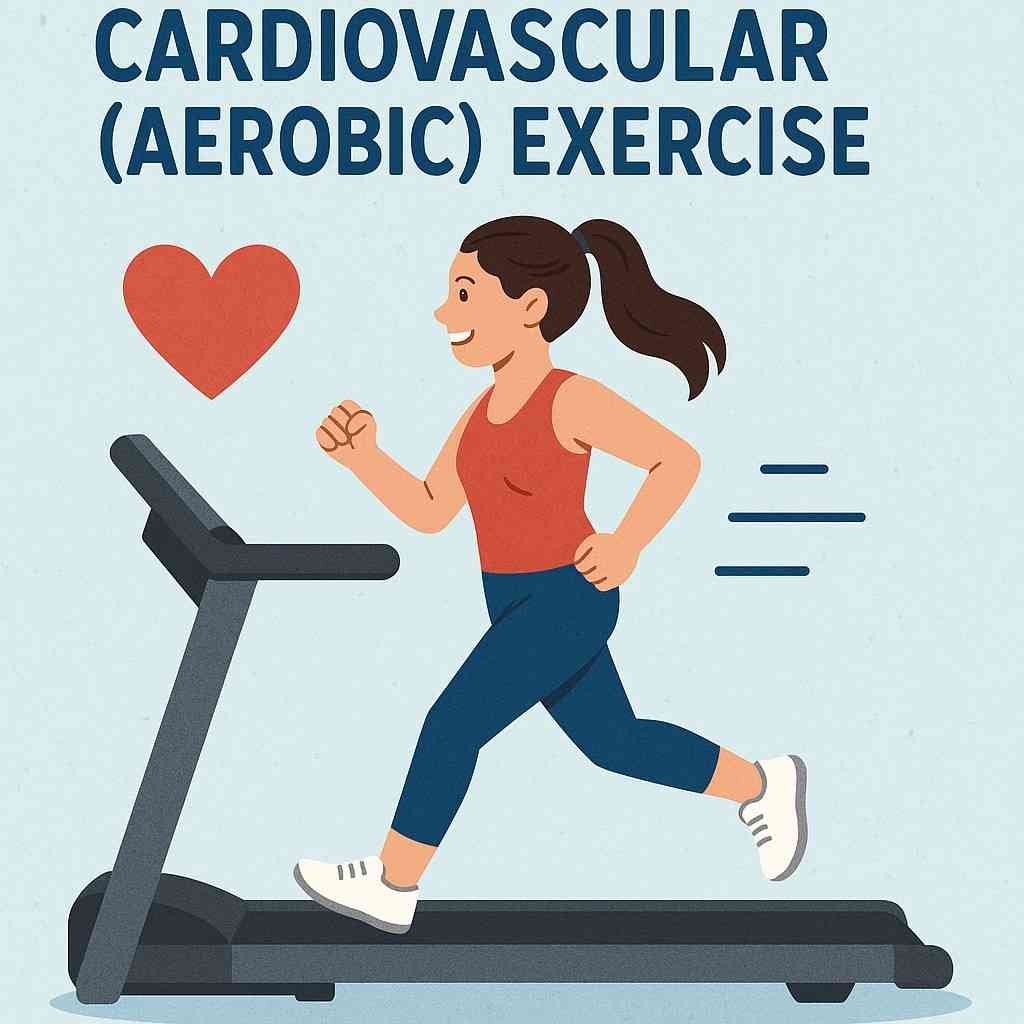
The Role of Cardio in Overall Fat Loss: Creating a Calorie Deficit
To lose fat, you need to consume fewer calories than you burn. This is known as creating a calorie deficit. Cardiovascular exercise is highly efficient at burning calories, directly contributing to this deficit. While HIIT offers the “afterburn” effect, steady-state cardio burns a significant number of calories during the exercise session.
When you engage in cardio, your body primarily uses oxygen to break down carbohydrates and fats for energy. Over time, consistent cardio sessions can lead to a substantial cumulative calorie burn, prompting your body to tap into its fat reserves, including visceral fat (the type surrounding your organs) and subcutaneous fat (under the skin).
Best Cardio for Belly Fat:
While no single exercise can “spot reduce” fat from a specific area like the belly, these cardiovascular activities are excellent choices for overall fat loss, which will naturally lead to a reduction in belly fat over time:
Running/Brisk Walking:
Benefits: These are highly accessible and effective forms of cardio. Running burns a significant number of calories, while brisk walking is a great low-impact option that can be sustained for longer durations, leading to a substantial calorie burn over time. Both engage core muscles to some extent for stability.
How to: Start with a comfortable pace and gradually increase your speed and duration. For brisk walking, aim for a pace where you can still talk but would struggle to sing.
Cycling:
Benefits: Cycling, whether outdoors or on a stationary bike, is a low-impact exercise that’s gentle on the joints while providing an excellent cardiovascular workout. It can be easily varied in intensity, making it suitable for all fitness levels. It engages the leg muscles strongly, which are large muscle groups, leading to a good calorie burn.
How to: Maintain a consistent pace for a sustained period, or incorporate intervals of higher intensity (e.g., cycling faster or against more resistance).
Swimming:
Benefits: Swimming is a full-body workout that’s incredibly low-impact, making it ideal for individuals with joint issues or those seeking a refreshing alternative. It works numerous muscle groups simultaneously, leading to a high calorie expenditure. The resistance of the water also provides a mild strength training component.
How to: Try different strokes to engage various muscle groups and prevent boredom. Aim for continuous laps, taking short breaks as needed.
Rowing:
Benefits: Rowing is a fantastic full-body exercise that engages the legs, core, back, and arms. It’s a highly efficient calorie burner and can be adjusted for intensity. The smooth, rhythmic motion makes it a great low-impact option.
How to: Focus on proper form: initiate the stroke with your legs, then lean back slightly and pull with your arms. Reverse the motion to return to the starting position.
Jumping Jacks:
Benefits: While often incorporated into HIIT, sustained jumping jacks can also serve as an effective cardio workout. They are a dynamic, full-body exercise that elevates your heart rate quickly and burns a good amount of calories. They require no equipment and can be done anywhere.
How to: Maintain a steady rhythm and focus on controlled movements. For a cardio session, aim for continuous sets with short rest periods.
Key Principles for Cardio and Fat Loss:
Duration and Intensity:
For effective fat loss, aim for at least 150 minutes of moderate-intensity cardio or 75 minutes of vigorous-intensity cardio per week, as recommended by health organizations. You can break this down into shorter sessions (e.g., 30 minutes, five days a week).
Consistency is Key:
Regular cardio sessions are more effective than sporadic intense workouts. Make it a habit.
Variety:
Mix up your cardio routines to prevent plateaus, keep your body challenged, and maintain interest.
Combine with Strength Training:
While cardio burns calories, strength training builds muscle, which boosts your metabolism and burns more calories at rest. A combination of both is the most effective strategy for fat loss.
Nutrition:
Remember that exercise alone won’t get rid of belly fat if your diet isn’t in check. A balanced, calorie-controlled diet rich in whole foods is paramount.
Strength Training: The Metabolism-Boosting Secret to Remove Stubborn Belly Fat
Alongside effective cardio and HIIT, strength training is a crucial component in the battle against stubborn belly fat. It directly impacts your body composition by building muscle, which in turn has a significant positive effect on your metabolism and overall fat loss.
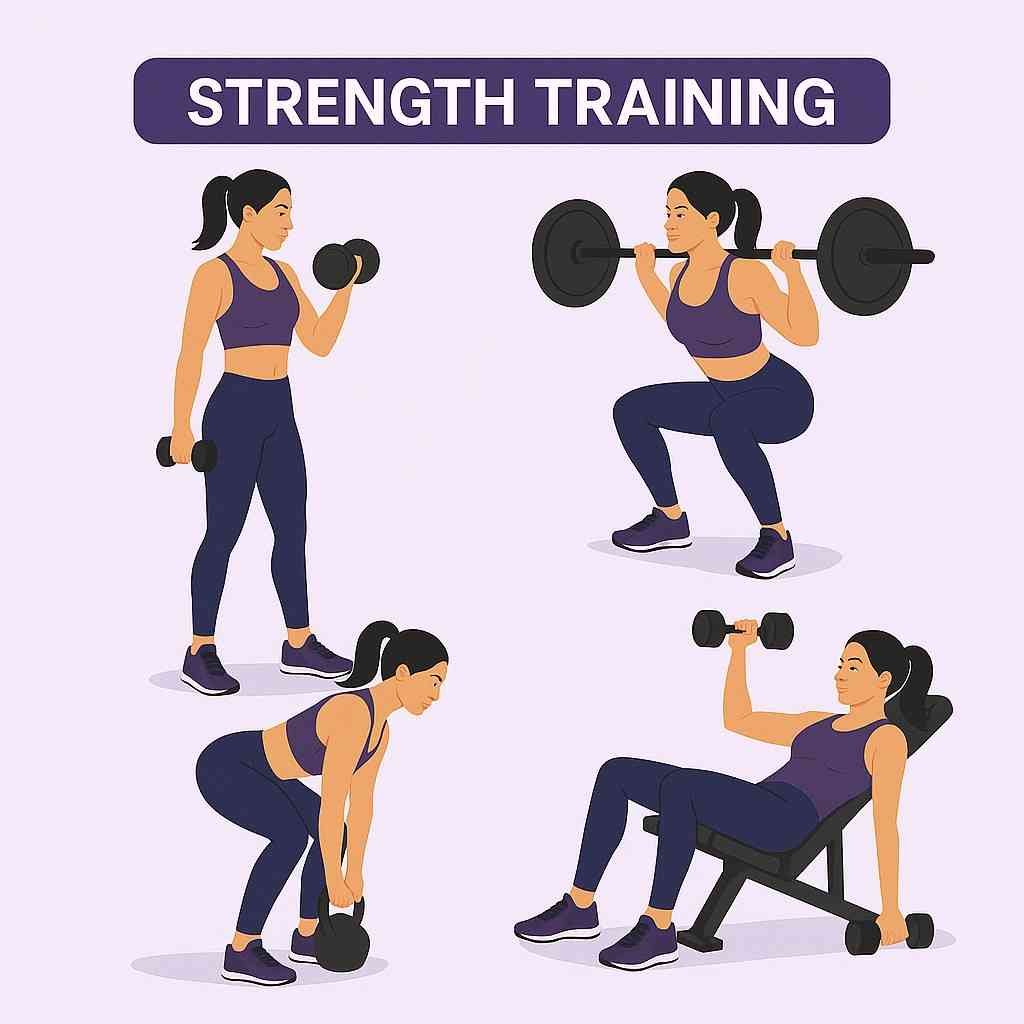
How Muscle Mass Impacts Fat Loss: Increased Resting Metabolic Rate
Muscle tissue is metabolically more active than fat tissue. This means that even at rest, your muscles burn more calories than an equivalent amount of fat. This phenomenon is known as an increased resting metabolic rate (RMR).
The Science:
When you build muscle through strength training, you essentially “fire up” your internal furnace. Your body expends energy to maintain this muscle tissue, even when you’re sleeping or sitting. This continuous calorie burning throughout the day, often referred to as the “afterburn” of weight training (similar to EPOC in HIIT), is a powerful advantage for fat loss.
Beyond the Workout:
While a cardio session burns calories during the activity, the metabolic benefits of strength training extend far beyond the workout itself. The more muscle you have, the higher your RMR, meaning you’re burning more calories 24/7. This makes it easier to create and maintain the calorie deficit necessary for fat loss.
Body Composition Improvement:
Strength training doesn’t just reduce fat; it also improves your body composition by increasing your lean muscle mass relative to fat mass. This not only makes you look leaner but also contributes to better overall health and functional fitness.
Full-Body Strength Exercises to Support Belly Fat Removal:
To maximize the metabolic boost and overall fat loss, focus on compound exercises. These exercises engage multiple muscle groups simultaneously, leading to a greater calorie expenditure during the workout and a more significant impact on your RMR. Here are some excellent full-body strength exercises:
Squats:
Benefits: A fundamental lower-body exercise that works the quadriceps, hamstrings, glutes, and core. Squats are incredibly effective for building lower body strength and stimulating a significant metabolic response due to the large muscle groups involved.
How to: Stand with feet shoulder-width apart. Lower your hips as if sitting in a chair, keeping your chest up and back straight. Go as low as comfortable, then push through your heels to return to the starting position. Can be done with bodyweight, dumbbells, or a barbell.
Lunges:
Benefits: Excellent for working each leg independently, improving balance, and strengthening the quadriceps, hamstrings, and glutes. Lunges also engage the core for stabilization.
How to: Step forward with one leg, lowering your hips until both knees are bent at approximately a 90-degree angle. Ensure your front knee is directly over your ankle and your back knee hovers above the ground. Push off your front foot to return to the start. Alternate legs. Can be done with bodyweight or weights.
Deadlifts:
Benefits: Often called the “king of exercises,” deadlifts work almost every major muscle group, including the glutes, hamstrings, back, traps, and forearms. They are incredibly effective for building overall strength, power, and a high metabolic demand.
How to: (Requires proper form, consider professional guidance if new) Stand with feet hip-width apart, shins close to the barbell or dumbbells. Hinge at your hips and bend your knees to grip the weight. Keeping your back straight, lift the weight by extending your hips and knees simultaneously. Lower with control.
Push-ups:
Benefits: A classic upper-body exercise that targets the chest, shoulders, and triceps, while also engaging the core for stability. Push-ups are a fantastic bodyweight exercise that can be modified for various fitness levels.
How to: Start in a plank position with hands slightly wider than shoulder-width apart. Lower your chest towards the floor by bending your elbows, keeping your body in a straight line. Push back up to the starting position. Modify by doing them on your knees if needed.
Kettlebell Swings:
Benefits: A dynamic, full-body exercise that builds power, endurance, and strengthens the glutes, hamstrings, core, and shoulders. Kettlebell swings are an excellent calorie burner and contribute significantly to overall conditioning.
How to: (Requires proper technique) Stand with feet wider than shoulder-width, kettlebell on the floor in front. Hinge at your hips, slightly bending your knees, to grab the kettlebell. Explosively extend your hips and knees to swing the kettlebell forward and up to chest height, keeping your arms relaxed. Let the kettlebell swing back between your legs, hinging at your hips again.
Tips for Effective Strength Training:
Consistency: Like all forms of exercise, consistency is paramount for achieving and maintaining results.
Frequency: Aim for 2-3 full-body strength training sessions per week on non-consecutive days to allow for muscle recovery.
Progressive Overload: To continue building muscle and seeing results, you need to increase the challenge gradually. This can be done by lifting heavier weights, doing more repetitions, or increasing the number of sets.
Proper Form: Always prioritize correct form over lifting heavy weights. Poor form can lead to injuries and reduce the effectiveness of the exercise.
Nutrition: Support your muscle growth with adequate protein intake and a balanced diet.
Importance of Progressive Overload
Progressive overload is a fundamental principle of strength training and is crucial for continued progress in building muscle and strength, which in turn significantly aids in fat loss. It essentially means consistently making your workouts more challenging over time.
Why is it important?
Muscle Adaptation:
Your muscles adapt to the demands placed upon them. If you keep lifting the same weight for the same number of repetitions, your muscles will eventually stop growing and getting stronger because they are no longer being challenged beyond their current capacity.
Continued Muscle Growth: To stimulate muscle growth (hypertrophy), you need to continually provide a new stimulus. Progressive overload forces your muscles to work harder, leading to micro-tears that repair and rebuild stronger, increasing muscle mass.
Higher Resting Metabolic Rate: As discussed, more muscle mass leads to a higher resting metabolic rate, meaning you burn more calories at rest. Without progressive overload, muscle growth plateaus, and so does this metabolic benefit.
Preventing Plateaus: If you hit a plateau where you’re no longer seeing results, it’s often because you’re not applying progressive overload. Regularly increasing the challenge ensures you continue to make progress.
Enhanced Strength and Performance: Beyond aesthetics and fat loss, progressive overload makes you stronger and improves your overall physical performance in daily activities and other forms of exercise.
How to Implement Progressive Overload:
There are several ways to progressively overload your muscles:
Increase Weight/Resistance: This is the most common method. When an exercise becomes easy, try lifting a slightly heavier weight.
Increase Repetitions:
If you can comfortably complete your target reps, add a few more to each set.
Increase Sets:
Add an extra set to your routine for a particular exercise.
Decrease Rest Time:
Shortening the rest periods between sets can increase the intensity and challenge your cardiovascular system more.
Improve Form/Tempo:
Mastering perfect form and controlling the tempo (how quickly you perform each part of the movement) can make an exercise more challenging, even with the same weight.
Increase Frequency:
Training a muscle group more often per week (e.g., from twice a week to three times).
Introduce More Challenging Exercises:
Progress from easier variations to more difficult ones (e.g., knee push-ups to regular push-ups, bodyweight squats to goblet squats).
By consistently applying progressive overload, you ensure your body is always adapting and improving, leading to sustained muscle growth and, consequently, more effective and lasting fat loss.
Core-Specific Exercises: Strengthening and Toning (Not Just Fat Loss)
It’s crucial to understand that while core exercises are vital for overall fitness and can contribute to a tighter, more toned appearance around the midsection, they do not directly burn belly fat from that specific area. Spot reduction (the idea that you can lose fat from one specific body part by exercising it) is a myth. Belly fat is lost as part of overall body fat reduction through a combination of diet, calorie deficit, and full-body exercise (HIIT, cardio, strength training).
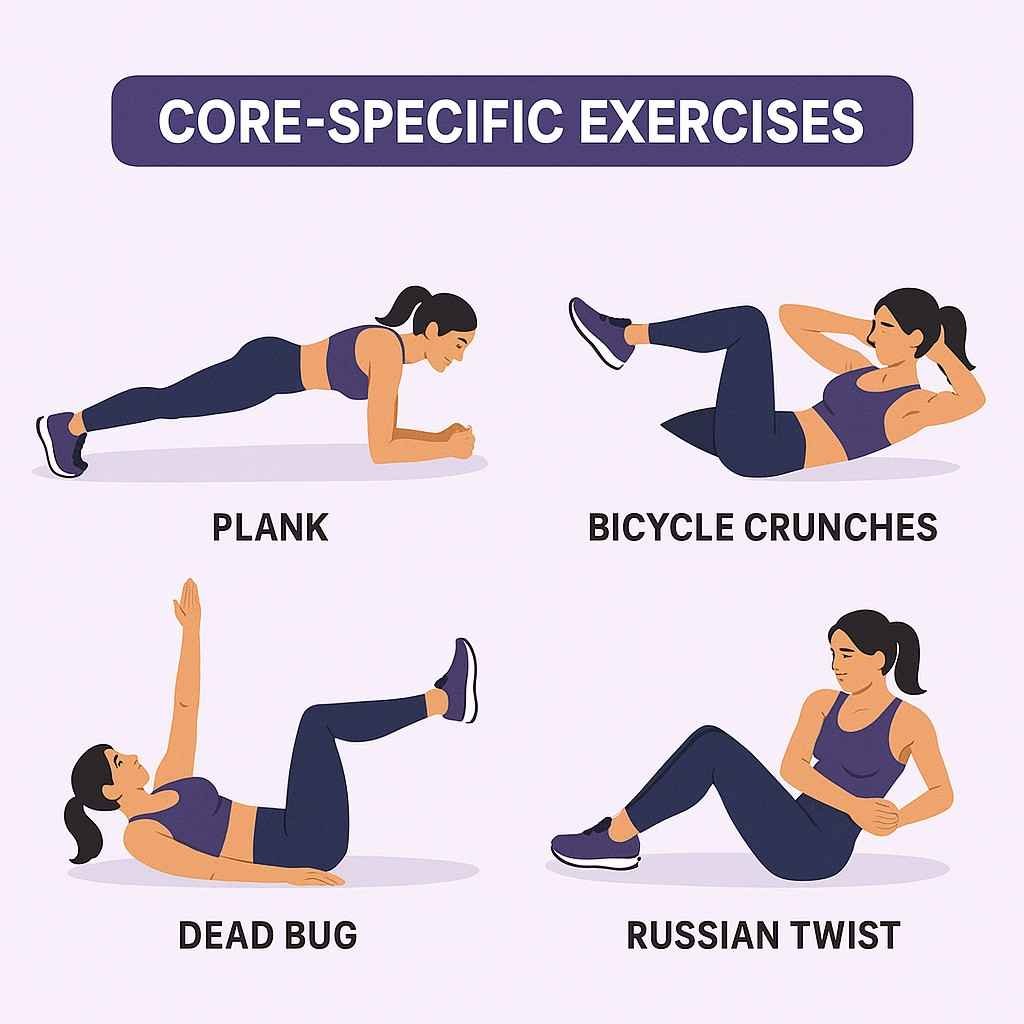
However, a strong core offers immense benefits:
Improved Posture:
A strong core helps maintain proper spinal alignment, reducing back pain and improving overall posture.
Enhanced Performance:
Most athletic movements and daily activities originate from the core. A strong core translates to better performance in sports, lifting, and everyday tasks.
Injury Prevention:
A stable core protects your spine and reduces the risk of injuries, especially in the lower back.
Aesthetic Toning:
While it won’t remove the fat on top, strengthening your core muscles will make them more prominent and toned once the overlying fat is reduced. This contributes to the coveted “flat stomach” or “six-pack” look.
Understanding Core Muscles:
The “core” is more than just your “abs.” It’s a complex group of muscles that stabilize your trunk and allow for movement. Key core muscles include:
Rectus Abdominis:
The “six-pack” muscle running vertically down the front of your abdomen. Primarily responsible for flexing your spine (e.g., crunches).
Obliques (Internal and External):
Located on the sides of your abdomen. They are responsible for twisting and side-bending movements of the trunk.
Transverse Abdominis (TVA):
The deepest abdominal muscle, running horizontally around your midsection like a natural corset. It plays a critical role in stabilizing the spine and compressing the abdominal contents. Often engaged in “bracing” movements.
Erector Spinae:
Muscles running along your spine that help with extension and rotation of the back. (While not typically considered “abdominals,” they are crucial for a strong and healthy core).
Top Core Exercises:
These exercises target various core muscles, focusing on stability, flexion, rotation, and anti-extension/anti-rotation movements.
Planks (Forearm Plank, Side Plank):
Benefits: Excellent for building isometric strength in the entire core, especially the transverse abdominis and rectus abdominis, promoting spinal stability and endurance.
How to (Forearm Plank): Lie face down, then prop yourself up on your forearms and toes. Keep your body in a straight line from head to heels, engaging your glutes and core to prevent your hips from sagging or rising too high.
How to (Side Plank): Lie on your side, propped up on one forearm, with your body in a straight line. Engage your obliques to lift your hips off the floor.
Bicycle Crunches:
Benefits: Dynamically targets the rectus abdominis and obliques through a twisting motion.
How to: Lie on your back, hands behind your head, knees bent, and feet flat. Lift your shoulders and feet off the ground. Bring one elbow towards the opposite knee while extending the other leg straight. Alternate sides in a pedaling motion.
Russian Twists:
Benefits: Effectively targets the obliques for rotational strength and can also engage the rectus abdominis.
How to: Sit on the floor with knees bent and feet flat (or slightly lifted for more challenge). Lean back slightly, engaging your core, keeping your back straight. Clasp your hands together or hold a weight. Twist your torso from side to side, touching the floor on each side of your body.
Leg Raises:
Benefits: Primarily targets the lower rectus abdominis and hip flexors.
How to: Lie on your back, hands under your glutes for support (optional). Keep your legs straight (or slightly bent if needed) and slowly raise them towards the ceiling until your hips lift slightly off the floor. Slowly lower them back down without letting your heels touch the ground.
V-ups:
Benefits: An advanced core exercise that targets the entire rectus abdominis and hip flexors, requiring significant core strength and flexibility.
How to: Lie on your back with arms extended overhead and legs straight. Simultaneously lift your legs and upper body off the floor, reaching your hands towards your toes, forming a “V” shape with your body. Lower with control.
Dead Bug:
Benefits: Excellent for developing core stability and control, particularly for the transverse abdominis, without putting strain on the lower back. It focuses on anti-extension of the spine.
How to: Lie on your back with knees bent at 90 degrees directly over your hips, and arms extended towards the ceiling. Slowly extend one arm back overhead and the opposite leg forward, keeping your lower back pressed into the floor. Return to the start and alternate sides.
Integrate 2-3 core-specific workouts per week, focusing on quality of movement over quantity. Remember, a strong core is a foundation for all physical activity and contributes to overall health and a leaner appearance.
Sample Weekly Workout Plan to Remove Stubborn Belly Fat
This science-backed schedule combines HIIT, strength training, cardio, and core work for maximum fat burning while building lean muscle.
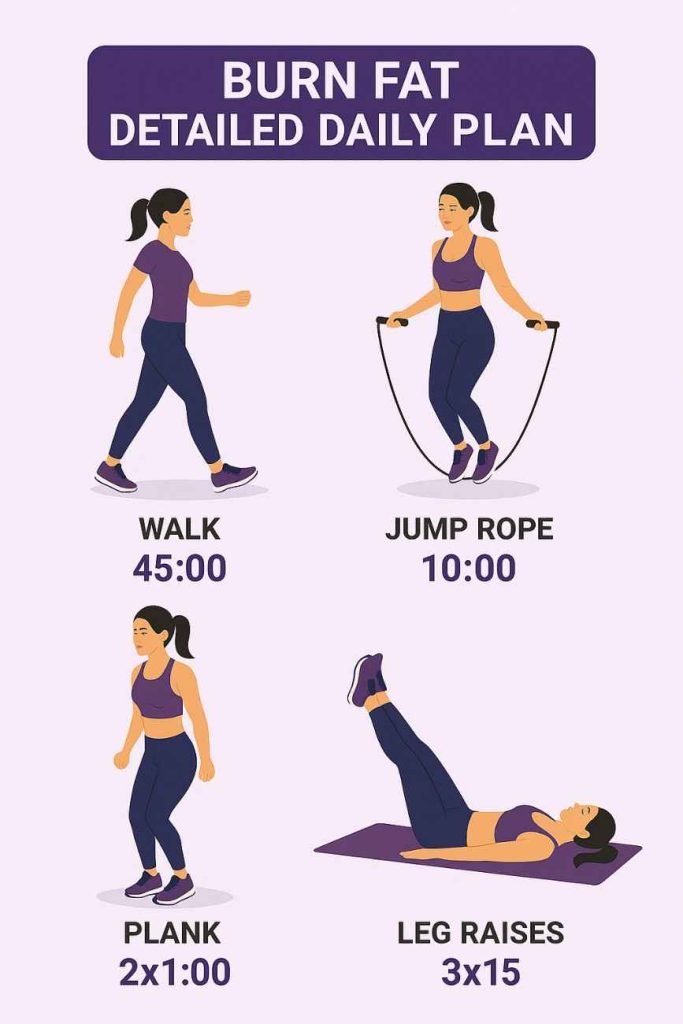
Weekly Breakdown
Monday: Full-Body Strength + HIIT
Tuesday: Low-Intensity Cardio + Core
Wednesday: Active Recovery (Yoga/Mobility)
Thursday: Lower Body Strength + HIIT
Friday: Upper Body Strength + Core
Saturday: High-Intensity Cardio (Running/Swimming/Cycling)
Sunday: Rest or Light Activity (Walk/Stretch)
Detailed Daily Plan
🏋️♂️ Monday: Full-Body Strength + HIIT
Strength Circuit (3 rounds):
- Squats – 12 reps
- Push-Ups – 10-15 reps
- Kettlebell Swings – 15 reps
- Bent-Over Rows – 12 reps
- Plank – 45 sec
HIIT Finisher (10 min):
- 30 sec Burpees
- 30 sec Jump Squats
- 30 sec Mountain Climbers
- 30 sec Rest (repeat 3x)
🏃♀️ Tuesday: Low-Intensity Cardio + Core
Cardio (30-45 min):
- Brisk walking, cycling, or swimming
Core Work (3 rounds):
- Bicycle Crunches – 20 reps
- Russian Twists (weighted) – 15/side
- Leg Raises – 12 reps
- Dead Bug – 10/side
🧘♂️ Wednesday: Active Recovery
- Yoga or mobility work (30-45 min)
- Foam rolling + deep stretching
🦵 Thursday: Lower Body Strength + HIIT
Strength Circuit (3 rounds):
- Deadlifts – 10 reps
- Lunges – 12/leg
- Glute Bridges – 15 reps
- Calf Raises – 20 reps
HIIT Finisher (10 min):
- 30 sec Jumping Jacks
- 30 sec Squat Jumps
- 30 sec Butt Kickers
- 30 sec Rest (repeat 3x)
💪 Friday: Upper Body Strength + Core
Strength Circuit (3 rounds):
- Dumbbell Shoulder Press – 12 reps
- Lat Pulldowns – 12 reps
- Tricep Dips – 10 reps
- Bicep Curls – 12 reps
Core Finisher (3 rounds):
- Side Plank – 30 sec/side
- V-Ups – 12 reps
- Flutter Kicks – 20 reps
🔥 Saturday: High-Intensity Cardio
Choose 1 (30-45 min):
- Running intervals (sprint 30 sec, jog 1 min)
- Swimming laps
- Cycling (HIIT style)
- Rowing machine sprints
😴 Sunday: Rest or Light Activity
- Walk, stretch, or leisure activity
Key Tips for Success:
✅ Progressive Overload: Increase weights/reps weekly
✅ Stay Consistent: Follow for 4+ weeks for results
✅ Pair with Nutrition: High-protein, whole foods diet
✅ Recover Well: Sleep 7-9 hours nightly
Stick to this plan to effectively remove stubborn belly fat and reveal a toned core!
(FAQ) – Removing Stubborn Belly Fat
1. Can I target belly fat specifically with exercises?
No, spot reduction is a myth. While core exercises strengthen abdominal muscles, they don’t directly burn belly fat. Fat loss occurs holistically across the body through a calorie deficit, cardio, and strength training.
2. How long does it take to lose stubborn belly fat?
It varies based on:
- Starting body fat %
- Diet & workout consistency
- Genetics & hormones
With a proper plan, visible changes typically appear in 4-12 weeks.
3. Are crunches or sit-ups effective for belly fat?
They strengthen abs but don’t burn fat. For better results, combine them with HIIT, strength training, and a calorie deficit.
4. What’s the best diet to lose belly fat?
Focus on:
✔ High protein (chicken, fish, tofu)
✔ Fiber-rich foods (veggies, oats, legumes)
✔ Healthy fats (avocado, nuts, olive oil)
❌ Minimize sugar, refined carbs, and alcohol
5. Does stress affect belly fat?
Yes! High cortisol (stress hormone) promotes visceral fat storage. Manage stress with:
- Sleep (7-9 hrs)
- Meditation/yoga
- Deep breathing exercises
6. How important is sleep for losing belly fat?
Critical! Poor sleep:
- Increases hunger hormones (ghrelin)
- Slows metabolism
- Raises cortisol (fat-storing hormone)
7. Should I do cardio or strength training for belly fat?
Both!
- Cardio burns calories (running, cycling, HIIT).
- Strength training builds muscle, boosting metabolism long-term.
8. Can I lose belly fat without exercise?
Possible, but slower. Diet is 70% of fat loss, but exercise:
- Speeds up results
- Prevents muscle loss
- Improves overall health
9. Why is my belly fat not going away despite working out?
Common reasons:
- Not in a calorie deficit
- Too much sugar/processed food
- Lack of progressive overload in workouts
- High stress/poor sleep
10. Are fat-burning supplements effective?
Most are not magic solutions. Focus on:
✔ Protein powder (supports muscle)
✔ Caffeine/green tea (minor metabolic boost)
❌ Avoid “quick fix” pills—consistency beats shortcuts!